
In the field of precision industrial automation, the creation of a robotic system for flat sheet metal cutting with a fiber laser represents an advanced technological project to increase the productivity and quality of complex metal components. This case study describes the implementation of a customized solution developed by Applyca for the client Stark S.p.A., a world leader in the cutting tools sector.
Client Objectives
Stark required a system capable of:
- Performing high-quality cuts on steels used for circular saw blades.
- Managing the automatic handling of cut pieces according to customized orientation and positioning.
- Integrating a vision system to identify holes, positions, and orientation of the blades before each cutting operation.
Technical Solution
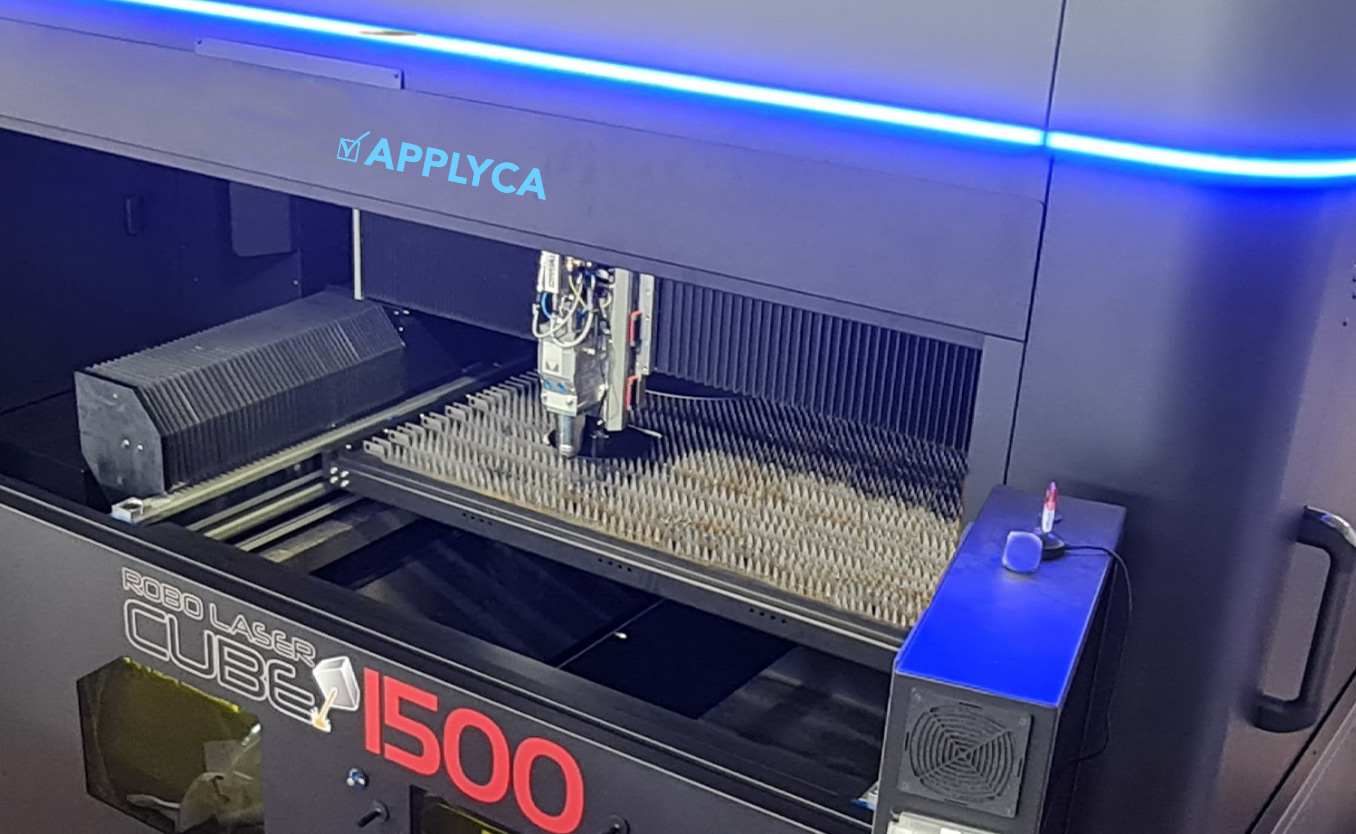
The Applyca staff customized the Robo Laser Cube base, integrating:
- Customized fiber laser system for two-dimensional cutting of flat sheet metal.
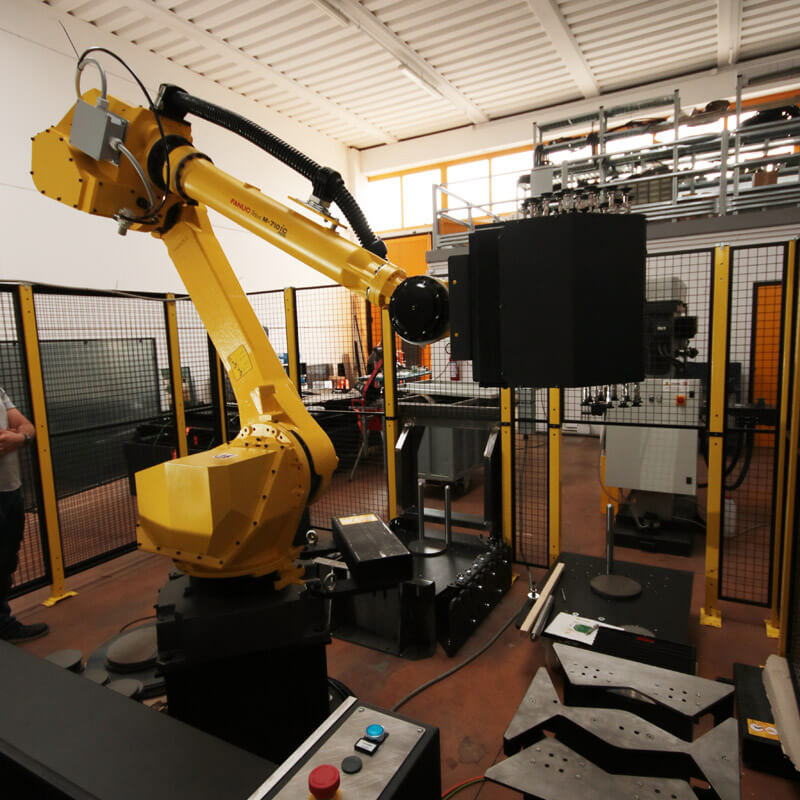
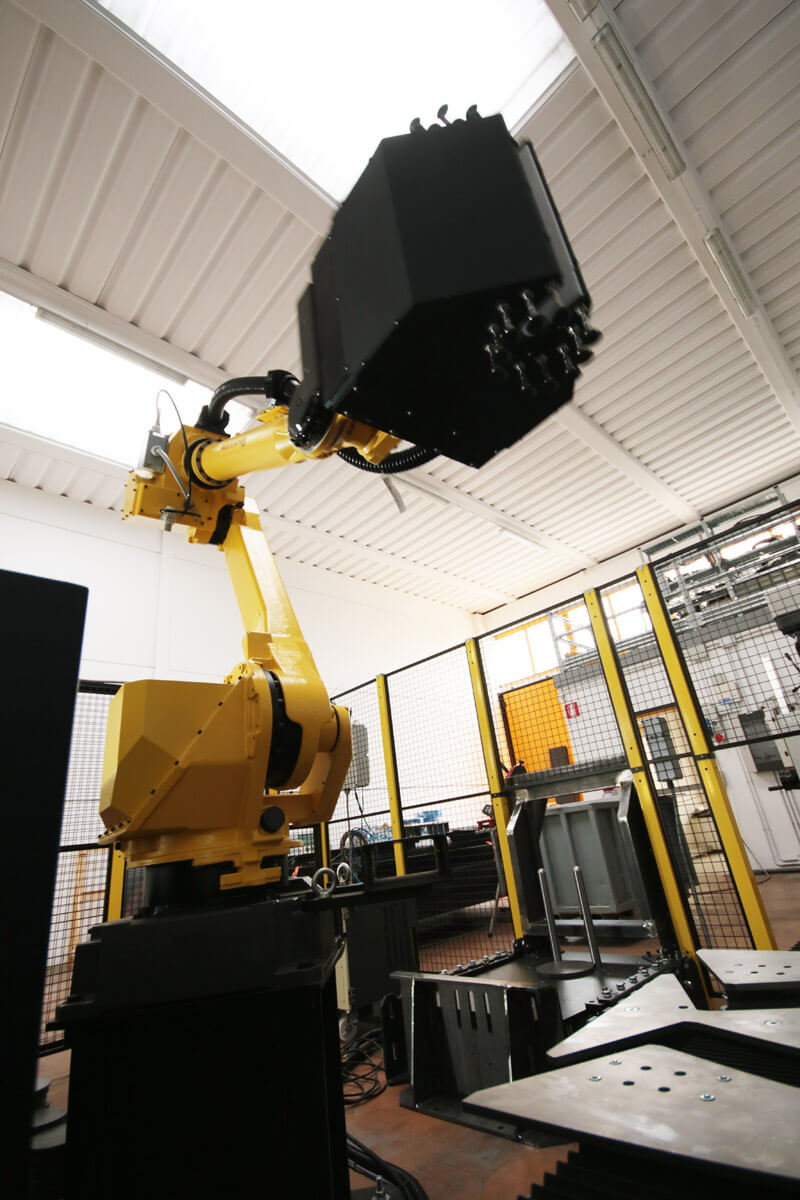
- Bespoke handling robot to position and pick up the blades to be cut.
- Artificial vision system to track the position and orientation parameters of the drive holes and the geometry of the pieces.
- Premium control and electrical components (Fanuc CNC, Siemens).
Implementation and Process
The system was designed to operate with a working area of 1,500 × 1,500 mm, allowing the system to be installed even in spaces with dimensional constraints. The fiber laser technology was configured to handle sheet metal of various sizes with repeatable precision, while the robot and vision system coordinate handling according to Stark’s production specifications.
Results Achieved
This solution optimizes operational efficiency by automating complex cutting cycles and reducing manual intervention in piece handling, improving times and costs. Robotics, artificial vision, and fiber laser technology guarantee cutting precision and high-quality results. It integrates perfectly with corporate digital processes, improving interoperability with design and production software and allowing for more efficient management of the production cycle.
Conclusions
The project represents a concrete example of how a robotic system for flat sheet metal cutting with a fiber laser can transform traditional production processes, bringing benefits in terms of speed, precision, and automation. Customization allows for adaptation to specific production needs and supports complex processes with high industrial standards.

